
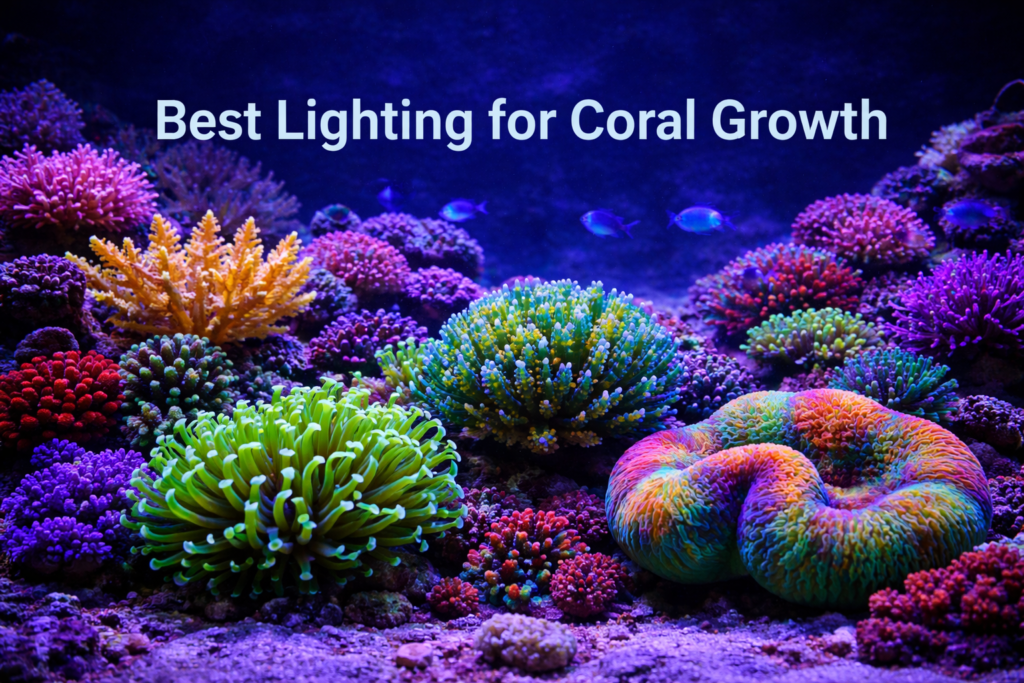
Lighting is one of the most important factors in a successful reef aquarium. Corals rely on light for energy through a process called photosynthesis, where microscopic algae inside the coral (zooxanthellae) produce nutrients that help the coral grow.
Choosing the right lighting system can mean the difference between healthy, vibrant corals and a struggling reef tank.
This guide will help you understand how reef lighting works and how to choose the best lights for coral growth.
Why Reef Lighting Matters
Corals depend on light to survive and grow. The symbiotic algae living inside coral tissue use light energy to produce sugars that feed the coral.
Without proper lighting:
• Coral growth slows down
• Coral color fades
• Some corals may die
Proper reef lighting ensures corals receive the energy they need to thrive.
Types of Reef Aquarium Lighting
There are several types of lighting used in reef aquariums, but modern reef systems typically use LED lighting.
LED Reef Lights
LED lighting is the most popular option for reef tanks today.
Benefits of LED lights:
• Energy efficient
• Low heat output
• Adjustable intensity and color spectrum
• Long lifespan
LED lights allow hobbyists to simulate natural sunlight and control the exact lighting conditions their corals receive.
T5 Fluorescent Lighting
T5 lighting has been used in reef aquariums for many years and still produces excellent coral growth.
Advantages:
• Very even light spread
• Proven coral growth performance
Disadvantages:
• Bulbs need replacing regularly
• Higher electricity usage than LED
Many advanced reef keepers combine LED and T5 lighting for the best results.
Metal Halide Lighting
Metal halide lighting was once the gold standard for coral growth.
Pros:
• Extremely strong light penetration
• Excellent for deep tanks
Cons:
• Very high heat output
• High electricity consumption
• Bulbs require frequent replacement
Today, most hobbyists prefer LED lighting instead.
Understanding PAR (Light Intensity)
PAR stands for Photosynthetically Active Radiation.
It measures the amount of usable light available for coral photosynthesis.
Different corals require different PAR levels.
Typical PAR ranges for corals
Soft Corals
50 – 100 PAR
LPS Corals
75 – 150 PAR
SPS Corals
200 – 400 PAR
Understanding PAR helps reef keepers position corals correctly inside the aquarium.
Choosing the Right Spectrum
Corals respond best to blue-heavy light spectrums.
Reef lights typically include:
• Royal Blue
• Blue
• Violet
• UV
• White
Blue light penetrates water better and enhances coral fluorescence, which is why reef tanks often appear blue.
How Long Should Reef Lights Run?
Most reef aquariums follow a daily light cycle of 8–10 hours.
Typical lighting schedule:
Ramp Up (Sunrise)
1–2 hours
Peak Lighting
6–8 hours
Ramp Down (Sunset)
1–2 hours
Using programmable LED lights allows you to simulate natural daylight patterns.
How Many Lights Does Your Tank Need?
Lighting requirements depend on the size and depth of your aquarium.
General guideline:
60–90 cm tanks
1 LED fixture
90–120 cm tanks
2 LED fixtures
120 cm or larger tanks
2–3 LED fixtures depending on coral types
Proper light coverage ensures even coral growth throughout the aquarium.
Common Reef Lighting Mistakes
Avoid these common mistakes when setting up reef lighting.
❌ Too much light too quickly
❌ Buying weak lights for a reef tank
❌ Not acclimating corals to new lighting
❌ Uneven light coverage
Corals need time to adjust to lighting changes.
Tips for Better Coral Growth
To maximize coral growth:
• Maintain stable water parameters
• Use quality reef lighting
• Ensure proper water flow
• Keep nutrients balanced
Lighting works together with water quality and flow to support healthy coral growth.
Recommended Reef Lighting
At Bespoke Reef, we focus on reef lighting solutions that deliver reliable performance and excellent coral growth.
When choosing reef lighting, look for:
• Adjustable spectrum
• Strong PAR output
• Reliable build quality
• Even tank coverage
The right lighting system will help your reef aquarium flourish for years to come.
Final Thoughts
Lighting plays a crucial role in the health and growth of coral reefs in home aquariums.
By choosing the correct lighting system, maintaining proper intensity, and following a natural light cycle, you can create the perfect environment for corals to thrive.
A well-lit reef tank not only supports coral growth but also brings out the stunning colors that make reef aquariums so captivating.