How to Start a Reef Aquarium (Beginner Guide)
Starting a reef aquarium is one of the most rewarding hobbies you can have. A thriving reef tank brings the beauty of the ocean into your home with colorful fish, vibrant corals, and fascinating marine life.
However, reef tanks require the right equipment, planning, and patience. This guide will walk you through how to start a reef tank properly, especially for hobbyists in South Africa.
Step 1: Choose the Right Tank Size
One of the biggest beginner mistakes is starting with a tank that is too small.
Smaller tanks look easier, but they are actually harder to keep stable because water parameters change faster.
Recommended beginner sizes
150 – 250 liters
Good beginner reef tank size.
250 – 450 liters
Ideal for a long-term reef aquarium.
Under 80 liters
Better suited for experienced reef keepers.
If you’re starting your first reef tank, aim for at least 150 liters.
Step 2: Essential Reef Tank Equipment
Reef aquariums require specialized equipment to support coral growth and stable water conditions.
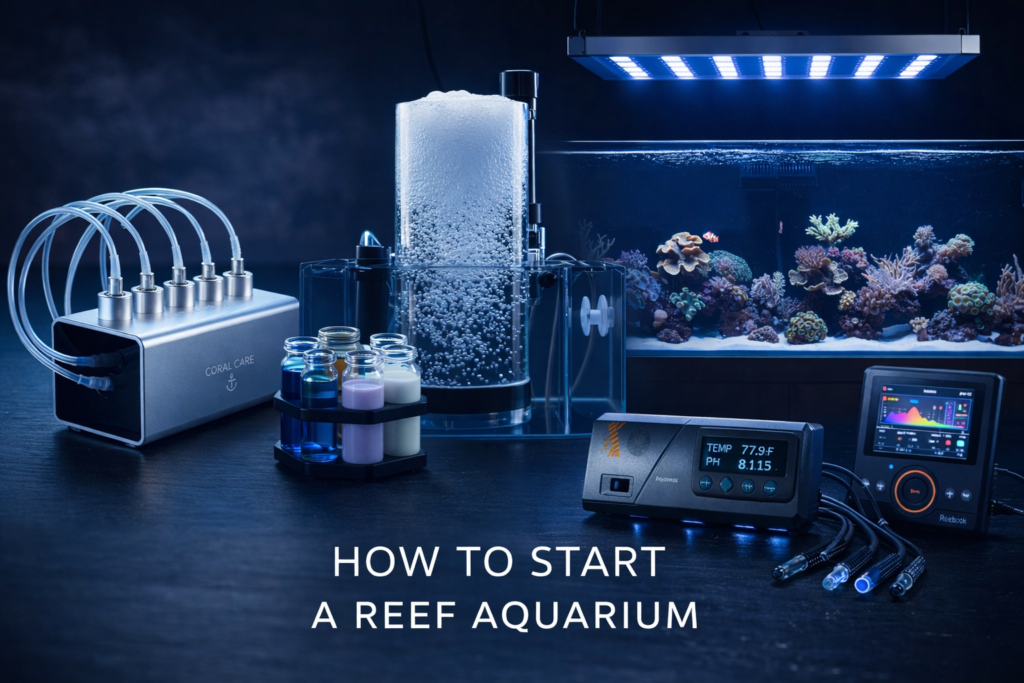
Essential equipment for a reef tank
Protein Skimmer
Removes waste and organic compounds before they break down.
Reef Lighting
Corals rely on strong lighting for photosynthesis. Quality LED reef lights are recommended.
Return Pump
Moves water from the sump back to the aquarium.
Wave Makers / Powerheads
Create water movement similar to ocean currents.
Aquarium Heater
Keeps temperature stable between 24°C and 26°C.
RODI System
Produces purified water without chlorine, nitrates, or phosphates.
Marine Salt Mix
Used to create saltwater.
Step 3: Use a Sump Filtration System
Most reef aquariums use a sump, which is a separate tank placed below the main aquarium.
Benefits of a sump
• Hides equipment
• Improves filtration
• Increases total water volume
• Makes maintenance easier
A typical sump contains:
Protein skimmer
Filter socks or filter roller
Return pump
Refugium (optional)
Step 4: Add Rock and Sand
Rock forms the biological foundation of your reef tank.
It provides surface area for beneficial bacteria that convert harmful waste into safer compounds.
Recommended amount of rock
Around 0.5 – 1 kg of rock per 10 liters of water
Most reef hobbyists today use:
Dry rock – Pest free and easier to control
Live rock – Contains beneficial bacteria but may bring pests
Step 5: Cycle the Aquarium
Before adding fish or coral, the aquarium must go through the nitrogen cycle.
This allows beneficial bacteria to grow and stabilize the system.
The cycling process
Fill the tank with saltwater
Add rock and sand
Introduce an ammonia source
Allow bacteria to develop
Cycling time
Usually 3 – 6 weeks
During the cycle you will see:
Ammonia → Nitrite → Nitrate
Once ammonia and nitrite reach zero, the tank is ready for fish.
Step 6: Add Beginner Fish
Start with hardy fish species.
Good beginner reef fish
• Clownfish
• Firefish
• Gobies
• Royal Gramma
Add fish slowly, allowing the tank to adjust.
Step 7: Start with Easy Corals
Once the tank is stable, you can start adding beginner corals.
Best beginner corals
• Zoanthids
• Mushroom corals
• Leather corals
• Xenia
These corals are hardy and adapt well to new tanks.
Step 8: Maintain Stable Water Parameters
Keeping parameters stable is critical for coral health.
Ideal reef parameters
Temperature
24 – 26°C
Salinity
1.025 Specific Gravity
pH
8.1 – 8.4
Ammonia
0 ppm
Nitrite
0 ppm
Nitrate
Below 10 ppm
Regular testing is essential for reef tanks.
Step 9: Regular Maintenance
Reef tanks require consistent care.
Weekly tasks
• Test water parameters
• Clean the protein skimmer cup
• Top off evaporated water with RODI
Monthly tasks
• Perform a 10–20% water change
• Clean pumps and equipment
• Replace filter socks
Common Beginner Mistakes
Avoid these mistakes when starting a reef tank:
❌ Adding too many fish too quickly
❌ Skipping the nitrogen cycle
❌ Using tap water instead of RODI
❌ Buying cheap reef lighting
❌ Not researching coral compatibility
Patience is the key to success in reef keeping.
Recommended Reef Equipment
At Bespoke Reef, we focus on high-quality reef equipment designed to help hobbyists build stable and thriving reef aquariums.
Explore our guides for:
• Protein Skimmers
• Reef Lighting
• Wave Makers
• RODI Systems
• Reef Controllers
Start Your Reef Journey
A reef aquarium is more than just a fish tank — it’s a living ecosystem.
With the right setup, patience, and equipment, you can create a thriving miniature ocean in your home.
If you’re just getting started, explore our reef equipment guides and product recommendations to build the perfect system.